
How to Price Items for an Estate Sale: A Guide for Tri-Cities Families
Pricing is where most families get stuck. The dining set your mother polished every Sunday, the crystal from a wedding sixty years ago, the tools your father kept in perfect order: each one carries a memory, and the number on the tag never seems to match it.
Shoppers see the same items differently. They compare your price with what they paid at the last sale, what they found on Facebook Marketplace this week, and what the item costs new. A price set from memory usually sits on the table until the last day.
This guide walks through how estate sale pricing works, how to research a fair price, which items tend to sell and which don’t, and how markdowns are planned. It’s the same process we use at Beloved Belongings for sales across Kennewick, Richland, Pasco and the rest of the Tri-Cities.
Start With What Buyers Pay Today
The goal is fair market value, the price a willing buyer would pay a willing seller right now. The original purchase price, the insurance value and what the item means to your family don’t set it. Consumers’ Checkbook describes estate sale prices as less than you’d pay for the same item at an antique store, and far less than new.
That gap can be hard to accept. A sofa bought for $2,000 ten years ago is a used sofa today, and it competes with every used sofa listed in the Tri-Cities this weekend.
How to Research a Fair Price
- Look at sold prices. On eBay, filter a search to “Sold items” to see what buyers paid. Asking prices on active listings tell you what sellers hope for, which is often much higher.
- Check the local market for bulky items. Furniture, appliances and exercise equipment sell to buyers who can pick them up, so Facebook Marketplace and Craigslist listings in the Tri-Cities are a better guide than national sites.
- Turn it over. Maker’s marks, signatures, labels and model numbers can change an item’s value more than its looks. Note them before you search.
- Be honest about condition. Chips, missing pieces, water damage and repairs lower the price. A complete set in good condition sells faster than a set missing two cups.
Items That Tend to Sell, and Items That Struggle
Tastes have changed, and some things families treasured have little resale demand. Estate sale and auction professionals report the same pattern across the country.
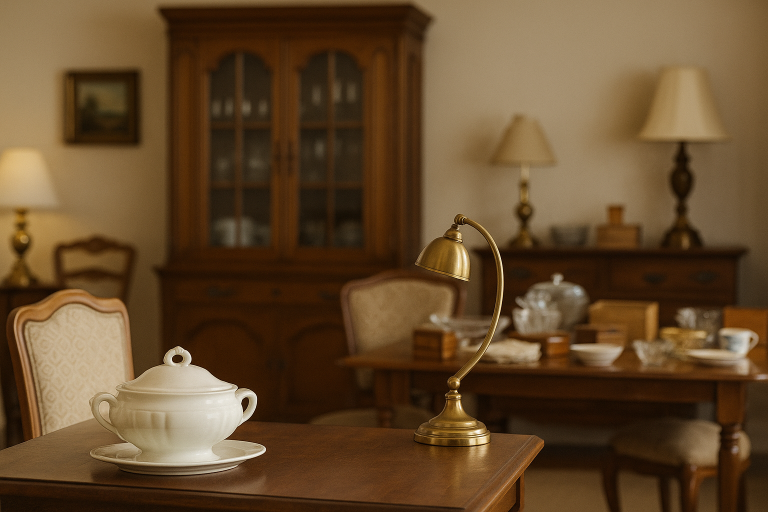
- Formal china and stemware: EstateSales.org lists china, china cabinets, crystal and stemware among the hardest items to sell at an estate sale. Many younger buyers prefer simpler styles.
- Cut crystal: one auction house notes that unmarked crystal sells for very little, and that names like Waterford or Tiffany are what carry value.
- Dark wood furniture: appraisers have reported steep drops in demand for mid-range “brown furniture” in recent years. Well-made pieces from known makers such as Stickley still hold value.
- Mid-century modern: clean-lined furniture and decor from the 1950s to the 1970s remains popular with younger buyers.
Most of these reports come from people who sell for a living, so treat them as trends that vary item by item. Collectibles are their own category, with values that rise and fall with collector demand. Our guide to valuing and selling collectibles goes deeper.
When an Item Needs an Appraisal or a Silent Auction
A fixed price works for most household goods. For a piece that may be worth far more than it looks, such as signed art, fine jewelry, rare collectibles or quality antiques, a guess in either direction costs you. Price it too low and the first dealer through the door takes it. Price it too high and it goes home with you.
Those items deserve a closer look before they get a tag. We review antiques and collectibles against recent comparable sales and current collector demand. For items where buyers may compete, a silent auction lets the bidding set the price.
Plan Markdowns Before the Sale Starts
Most estate sales lower prices as the sale goes on. A common pattern is about 25% off on the second day and about 50% off on the final day, though every company sets its own schedule. EstateSales.net notes the discount model is optional and up to each company.
Deciding the schedule ahead of time keeps emotion out of the moment. It’s much harder to agree to half off a favorite lamp at 2 p.m. on a Sunday than to agree to the plan a week earlier. Every sale we run includes a final-day markdown plan, so the family knows in advance how pricing will change.
Set Aside What the Family Is Keeping First
Before anything gets a price, agree on what stays in the family and remove it from the house or a clearly marked room. Pricing goes faster when nobody is second-guessing whether an item is for sale. Our estate sale checklist covers this step and the others that come before a sale.
What Happens to Items That Don’t Sell
Even a well-priced sale leaves some things behind. Usable items can go to local charities, and our guide to where to donate in the Tri-Cities lists who takes what. When we run a sale, we coordinate donations and disposal so the house is ready for its next step.
Why Families Hand Pricing to Someone Else
Families hire experts for a reason. Pricing a parent’s belongings asks you to put a number on a lifetime, often while you’re grieving or packing for a move. An outside team brings an objective point of view, knowledge of what Tri-Cities buyers pay, and the time to research hundreds of items.
Our team has more than 30 years of combined experience in antiques, collectibles, estate sales and real estate in the Tri-Cities. We work on commission, so we earn more only when your sale earns more. If you’re weighing whether to price a sale yourself, contact us or call (509) 827-9846 to talk through your sale.
Frequently Asked Questions
How much do estate sale items sell for? Usually well below retail. Estate sale prices aim for fair current market value, which is less than an antique store would charge and much less than the item costs new.
Should I price estate sale items myself? You can, using sold listings and local marketplace prices as a guide. Families often price sentimental items too high, and valuable items they don’t recognize too low, which is why many hire an estate sale company.
When do estate sale prices go down? Most sales discount on later days, commonly around 25% off on day two and around 50% off on the last day. Each company sets its own schedule.
Do I need an appraisal before an estate sale? Not for everyday household goods. Consider one for fine jewelry, art, rare collectibles and quality antiques, where a pricing mistake costs the most.
Sources: Consumers’ Checkbook, “Estate Sales”; EstateSales.org, “Estate Sale Tips for Hard to Sell Items”; Farmer Auctions, “The Bitter Truth About Brown Furniture and Grand Pianos”; Ahlstrom Appraisals, “Brown Furniture Blues”; EstateSales.net, “Estate Sale Pricing”; Seen Magazine, “Estate Sale Guide”.